Share


Executive Summary:
Experiential marketing agencies are transforming into strategic partners as brands increasingly prioritize highly curated, live experiences that generate authentic connections with their target audiences. Enterprise clients in particular value agencies that provide end-to-end capabilities spanning strategy, creative, production, and execution, creating durable customer relationships built on trust and operational excellence. Supplier fragmentation and roll-up opportunities, combined with continued growth in live events, expansion into adjacent experiential markets, and AI-enabled productivity improvements, make the sector an especially attractive area for private equity investment.
Growing Importance of Live Events
North American events remain one of the largest and most established marketing channels available to enterprise organizations. While digital marketing continues to play an important role, companies increasingly recognize that face-to-face engagement creates a level of interaction that digital channels cannot fully replicate. Brand activations, trade shows, conferences, and proprietary customer events allow organizations to simultaneously showcase products, build brand awareness, generate qualified leads, and strengthen customer relationships.
Now more than ever, live events are delivering more meaningful impact for three key reasons:
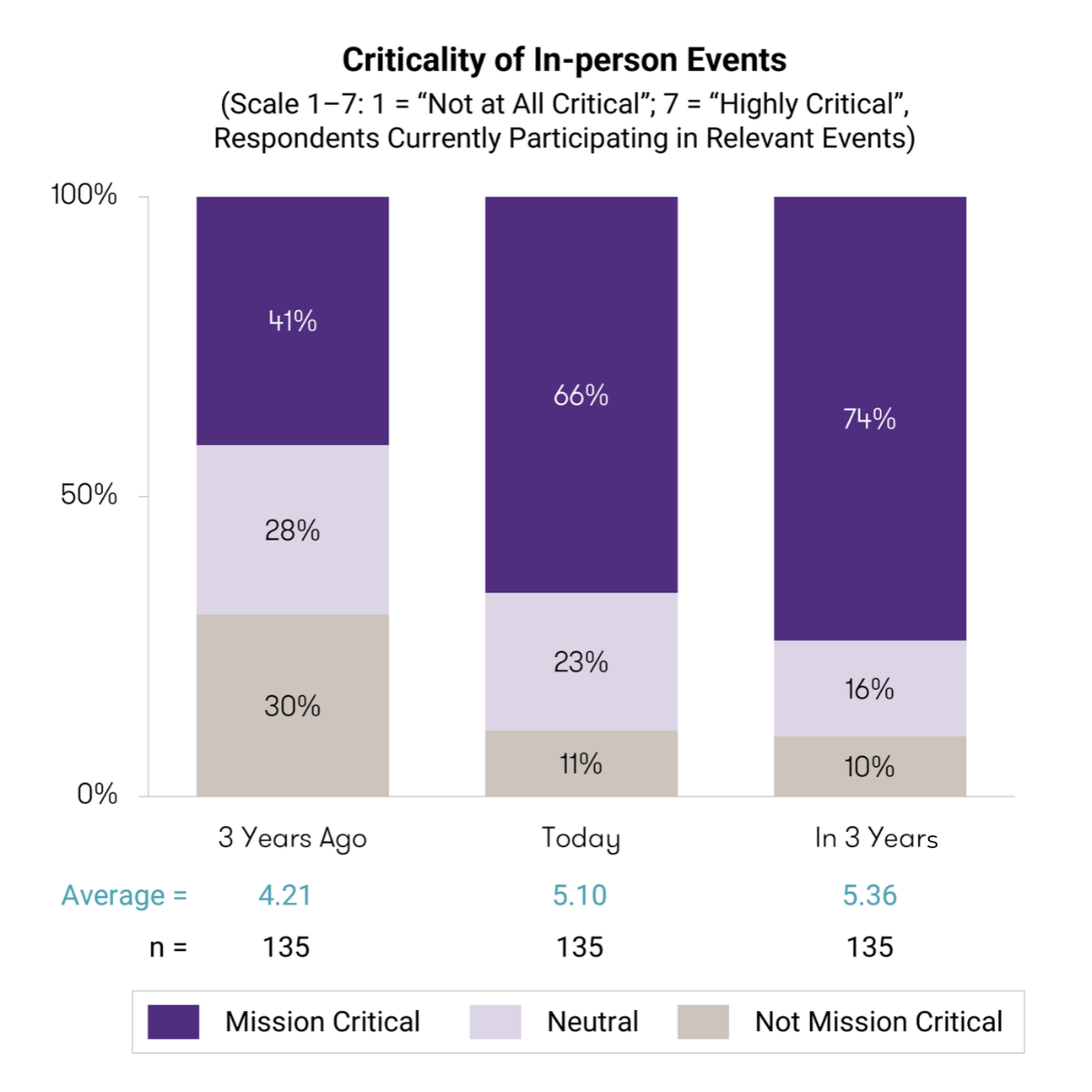
- Authentic Audience Engagement that is Difficult to Replicate: Live experiences create memorable, high-touch interactions that are difficult to replicate through digital channels, strengthening customer engagement and brand recall.
- Ability to Drive Desired Brand Positioning and Differentiation: Events allow organizations to craft their desired brand image and bring it life through immersive, live experiences.
- Experiential as a Catalyst for Broader Marketing Performance: Live events can amplify the ROI of other marketing channels (e.g., sales outreach, social media). Consumers who engage with brands in person are more likely to recognize, remember, and respond to them across other channels, creating opportunities for content generation where brands can repurpose photos and videos across digital and social channels.
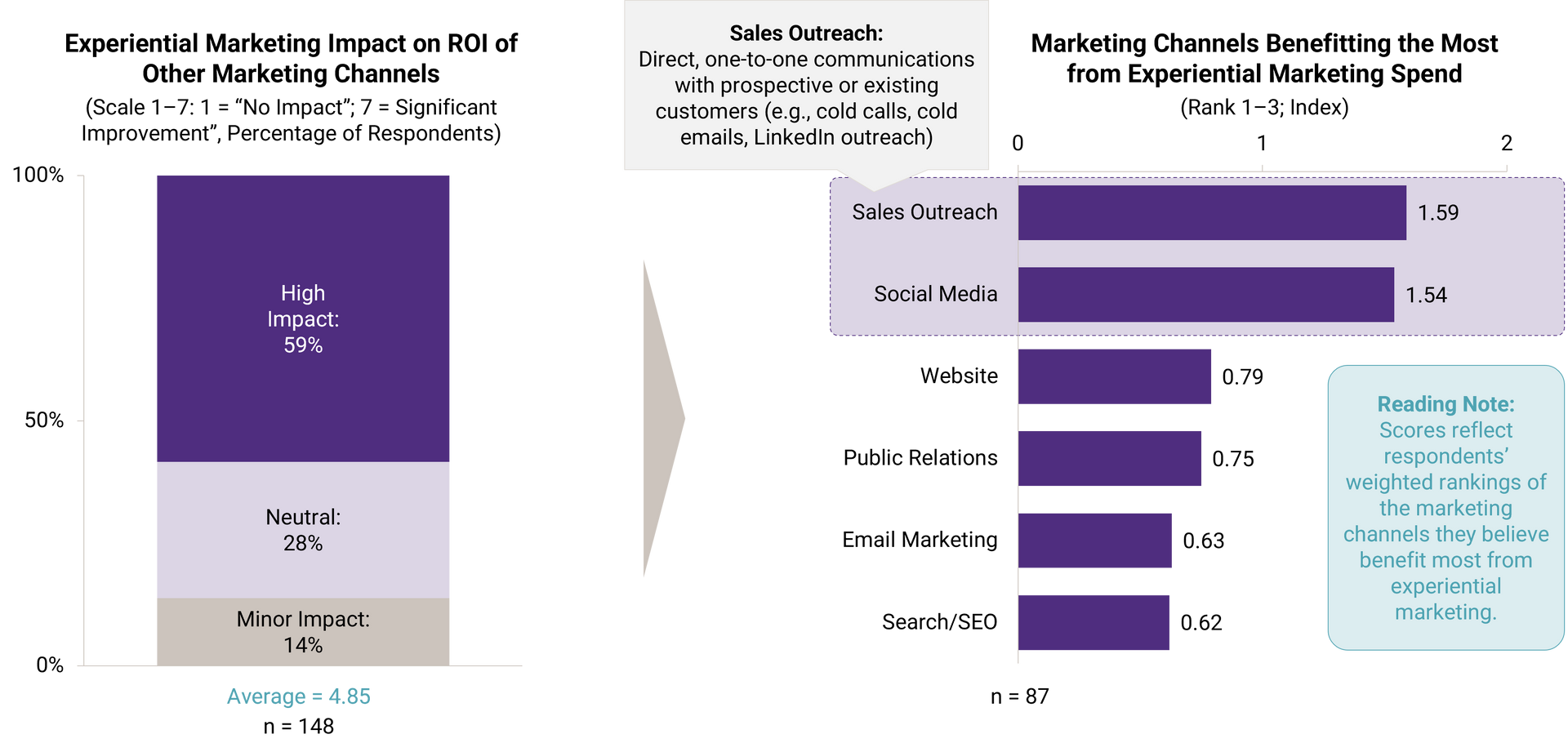
The broader events market is expected to continue growing, supported by sustained investment in customer engagement, product launches, partner development, and brand-building initiatives. Against this backdrop, agencies that help brands maximize the impact of each event are well positioned to benefit from long-term market expansion.
How Do Experiential Marketing Agencies Increase the Return on Live Events?
Agencies enhance the already strong ROI of live events by enhancing audience engagement with immersive environments that encourage interaction, strengthen brand recognition, and provide more meaningful customer experiences.
Further, one of the defining characteristics of leading experiential marketing agencies is their ability to manage the complete event lifecycle.
Projects frequently begin with strategic planning, where agencies work alongside clients to define objectives and success metrics, as well as coordinate outreach. These concepts are then translated into creative designs that combine physical environments with visual storytelling and digital experiences. Although creative design remains highly visible, enterprise clients consistently evaluate agencies across a much broader set of capabilities, placing considerable value on agencies that consistently deliver projects on time while proactively solving problems.
Along with creative, agencies oversee fabrication, production, transportation, installation, onsite management, and post-event logistics. Successfully coordinating these activities requires specialized expertise, extensive operational capabilities, and deep knowledge of venue requirements, labor regulations, and project management.
This integrated approach allows clients to focus on business objectives while relying on a single partner to coordinate the numerous activities required to deliver successful experiences. For enterprise organizations managing complex experience programs across multiple locations, consolidating these services increases output quality through full value chain ownership, minimizing costs by reducing handoffs to sub-contractors, and by driving accountability through a single entity.
Long-Term Partnerships Create Attractive Commercial Characteristics
One of the most compelling aspects of the experiential marketing agency model is the opportunity to develop durable customer relationships.
Unlike many other project-based service businesses, experiential agencies often support recurring annual event programs that require continuous planning, creative development, logistics, and optimization. Successful delivery reinforces customer trust, increasing the likelihood of repeat engagements and expanding the scope of future work.
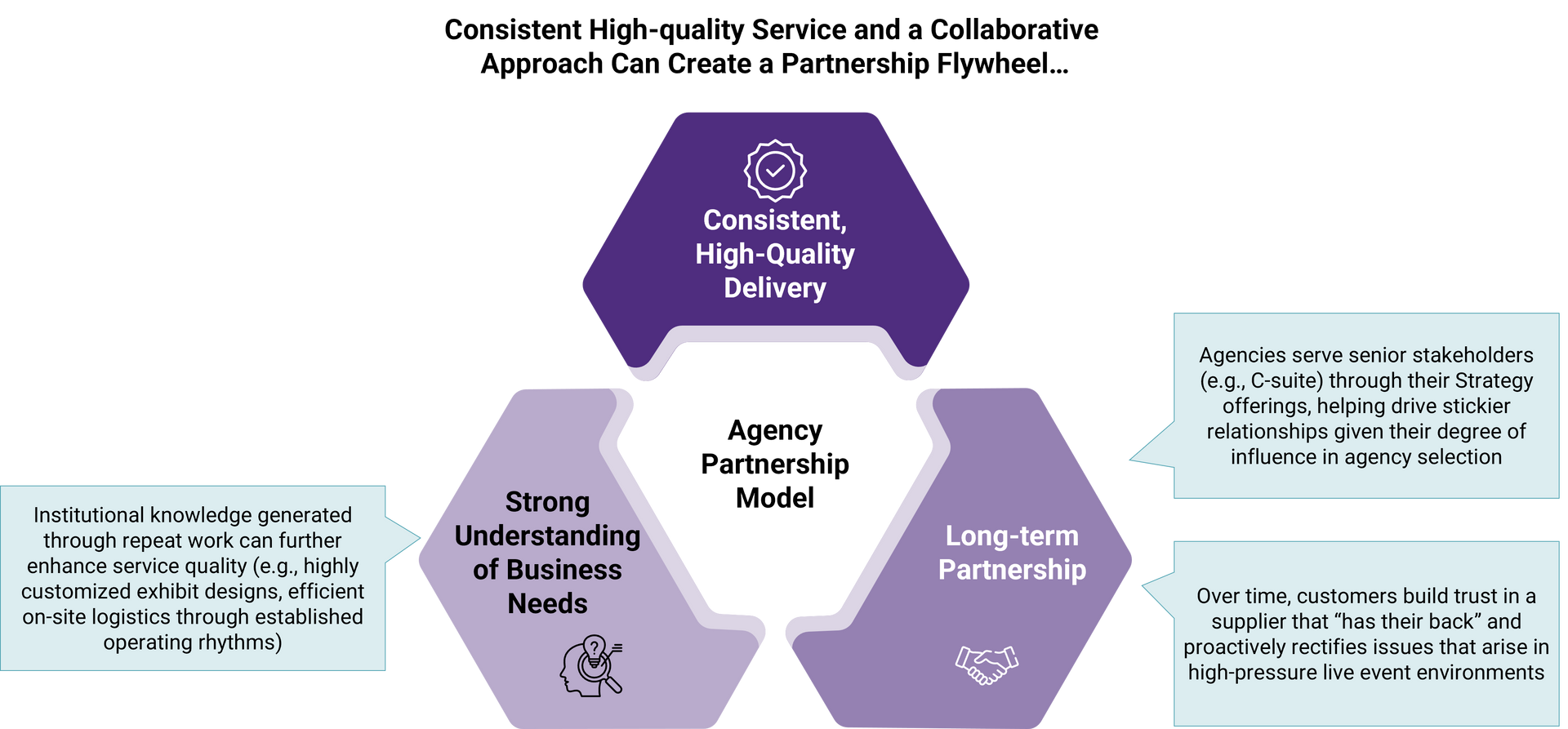
Over time, these relationships generate institutional knowledge that further improves service quality. Agencies become increasingly familiar with brand positioning, target audiences, logistics requirements, and stakeholder preferences, enabling more efficient planning and stronger execution with each successive event.
This creates a reinforcing commercial cycle. High-quality execution builds trust, trust strengthens client relationships, and long-term relationships generate deeper business understanding that further enhances future performance. The resulting customer retention can provide agencies with a more predictable revenue base while lowering customer acquisition costs.
For investors, these characteristics create an attractive combination of recurring demand, strong customer loyalty, and opportunities for organic account expansion.
Multiple Growth Opportunities Extend Beyond Traditional Events
Experiential marketing agencies have meaningful opportunities to expand into adjacent categories that leverage many of the same capabilities.
Retail environments increasingly require immersive customer experiences and regularly updated store concepts that combine branding, physical design, and customer engagement. Enterprises continue to invest in offices, experience centers, innovation spaces, and branded environments to improve employee morale and productivity while driving customer engagement.
Similarly, hospitality, entertainment, sports venues, museums, and cultural institutions continue investing in experiences that strengthen visitor engagement while supporting broader brand objectives. These environments often require the same strategic planning, creative design, fabrication, and project management capabilities already developed by experiential marketing agencies.
Technology Strengthens Rather Than Replaces Live Experiences
The increasing adoption of artificial intelligence (AI) is expected to enhance, rather than diminish, the value proposition of experiential marketing agencies.
AI is already improving operational efficiency across event planning through content creation, translation, customer relationship management, scheduling, and data analysis. These productivity gains allow agencies to reduce development timelines while delivering increasingly personalized experiences.
At the same time, the proliferation of AI-generated digital content is increasing the value of authentic face-to-face interactions. As digital communication becomes more automated, organizations continue to place significant value on in person engagement where trust, relationship building, and nuanced conversations remain difficult to replicate virtually.
The experience of Covid reinforced this dynamic. While digital alternatives expanded rapidly during periods of restricted travel, organizations consistently returned to live events as in person engagement resumed. Rather than replacing physical experiences, digital tools now serve, primarily, as complementary technologies meant to improve planning, communication, and attendee engagement.
For experiential marketing agencies, AI represents an opportunity to improve operating efficiency while strengthening the broader importance of live engagement.
Investment Implications
Experiential marketing agencies occupy an attractive position within the broader business services landscape. Demand is supported by continued investment in live experiences, increasing complexity of event execution, and enterprise customers' preference for integrated service providers capable of managing complete event programs.
The strongest platforms combine strategic advisory capabilities with creative excellence, operational execution, and long-standing enterprise relationships that generate recurring business and high customer retention. These advantages become increasingly difficult to replicate as agencies accumulate institutional knowledge and establish trusted partnerships with clients managing mission-critical experiences.
Looking ahead, opportunities for geographic expansion, adjacent market penetration, technology-enabled productivity improvements, and deeper enterprise account relationships provide multiple avenues for continued growth.
For private equity investors, the most attractive businesses are likely to be those with diversified enterprise customer bases, broad service capabilities, strong execution track records, and durable client relationships that position them to benefit from the continued evolution of experiential marketing.
About Grant Thornton Stax
Grant Thornton Stax has worked extensively across the experiential marketing value chain, supporting agencies, organizers, infrastructure and production suppliers, service providers and event technology vendors across diligence and growth strategy engagements. Our experience across the broader live event ecosystem enables us to proactively address key buy-side questions around market growth, cyclicality, route-to-market dynamics, competitive positioning, customer retention, and opportunities for category and geographic expansion.
To learn more about Grant Thornton Stax and our expertise, visit our Events page or click here to contact us directly.
Read More