Share

Executive Summary:
Reuters Responsible Business USA made clear that sustainability leaders are increasingly focused on tying their work to value creation, but the harder question is how to make that connection real. In this article, Anuj A. Shah argues that investors and management teams need to close the Sustainability Value Capture Gap by applying five practical commercial tests to sustainability initiatives before capital, budget, or organizational resources are committed. For privately held mid-market companies, this creates an opportunity to move beyond reporting-led ESG and focus sustainability work where it can influence customer demand, procurement access, pricing, margins, risk, and enterprise value.
In the months leading up to the Reuters Responsible Business USA conference, almost every conversation I had with sustainability professionals carried some version of the same tension. The specific challenges varied by company and sector but there were commonalities across roles: ambitious agendas, leaner teams, tighter budgets, more scrutiny, expanding reporting requirements (even in the US), and increasing pressure to demonstrate how their work contributes to value creation. The broader operating environment around the individuals doing this work has become more complex, more resource-intensive, and at times more disconnected from the business case. What I heard over two days reinforced a view I already held: “sustainability” will have a hard time competing for capital, budget, and executive attention unless it can be directly tied to revenue, margin, risk, customer demand, or enterprise value.
Across the panel discussions, one theme I repeatedly heard was the need to translate sustainability into language the business can actually use. Several Chief Sustainability Officers (CSOs) spoke about the importance of tying sustainability efforts to the company’s broader mission. Doing so helps teams articulate the value of the work, connect initiatives to the company’s purpose, and demonstrate to customers/employees/other stakeholders how the business is trying to deliver on that purpose. There was also a clear focus on sustainability as an innovation driver, which is one place where the topic becomes more commercially relevant—innovation can create differentiation, open new customer opportunities, strengthen competitive positioning, and make the mission feel tangible rather than performative.
My view, however, is that the explicit mission linkage is helpful although ultimately discretionary. The harder (and more essential) next step is connecting sustainability to the strategic decisions the business makes every day: what do customers value, what do procurement teams require, how should products be positioned and priced, where can circularity reduce waste or cost, and how can ESG data support better decision making without being just another reporting exercise.
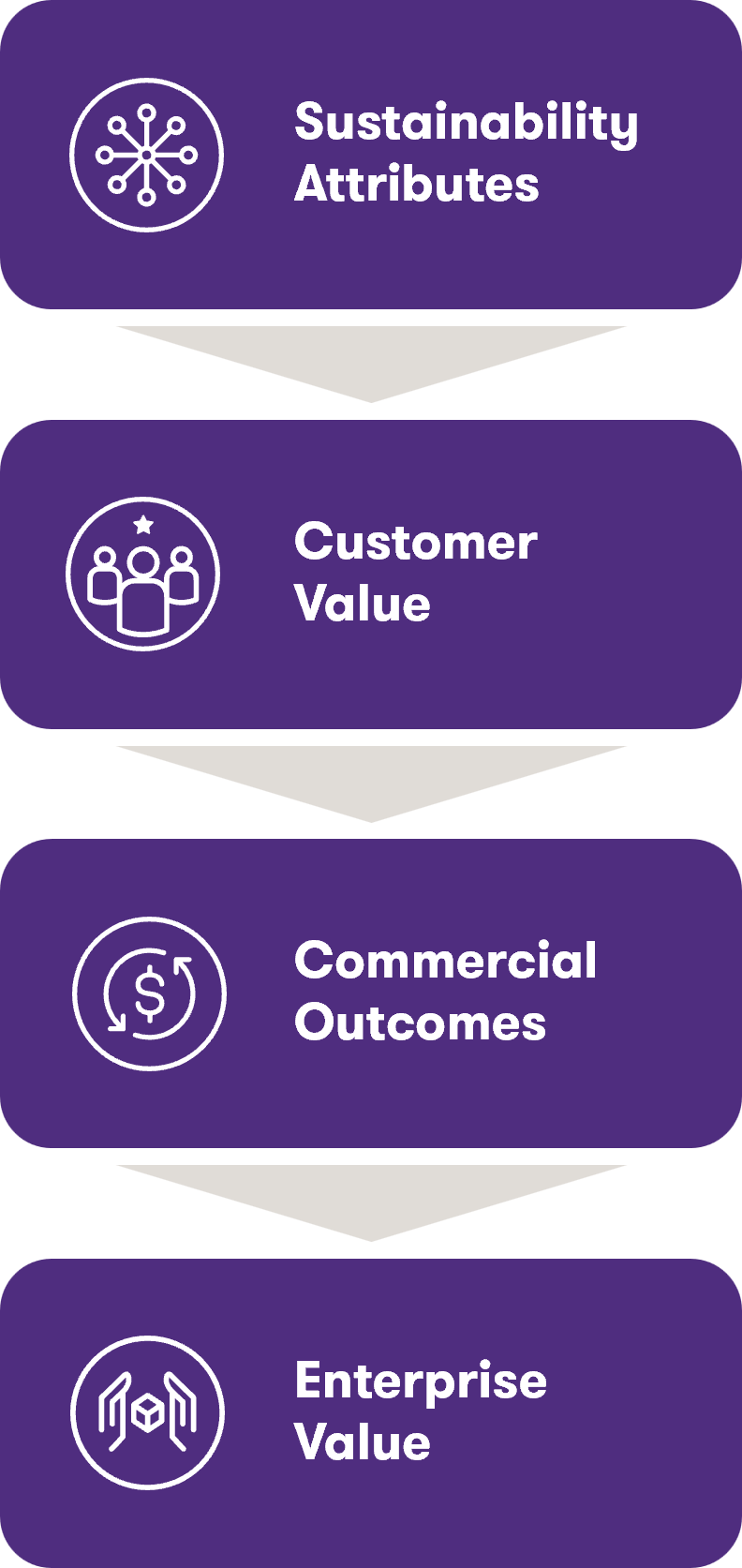

This is where I see many companies getting stuck and I have taken to calling this the Sustainability Value Capture Gap. Companies may have sustainability goals, initiatives, data, reports, pilots, messaging, etc., but many still have a hard time connecting those efforts to customer value, commercial outcomes, and ultimately enterprise value. For investors, that gap matters because activity alone doesn’t create value. Value is created when sustainability helps win a customer, protect or expand margin, improve procurement access, tangibly reduce risk, support pricing, lower cost, or make the business more attractive to the next buyer.
Five Commercial Tests
For companies trying to close the gap, the most practical starting point is a tighter set of commercial questions applied to every sustainability initiative before resources are committed:
- Do customers care and can we show it?
- Do procurement requirements change our access to customers or suppliers?
- Does this create pricing power?
- Can it reduce costs or improve margins?
- Will it make the business more attractive to the next buyer?
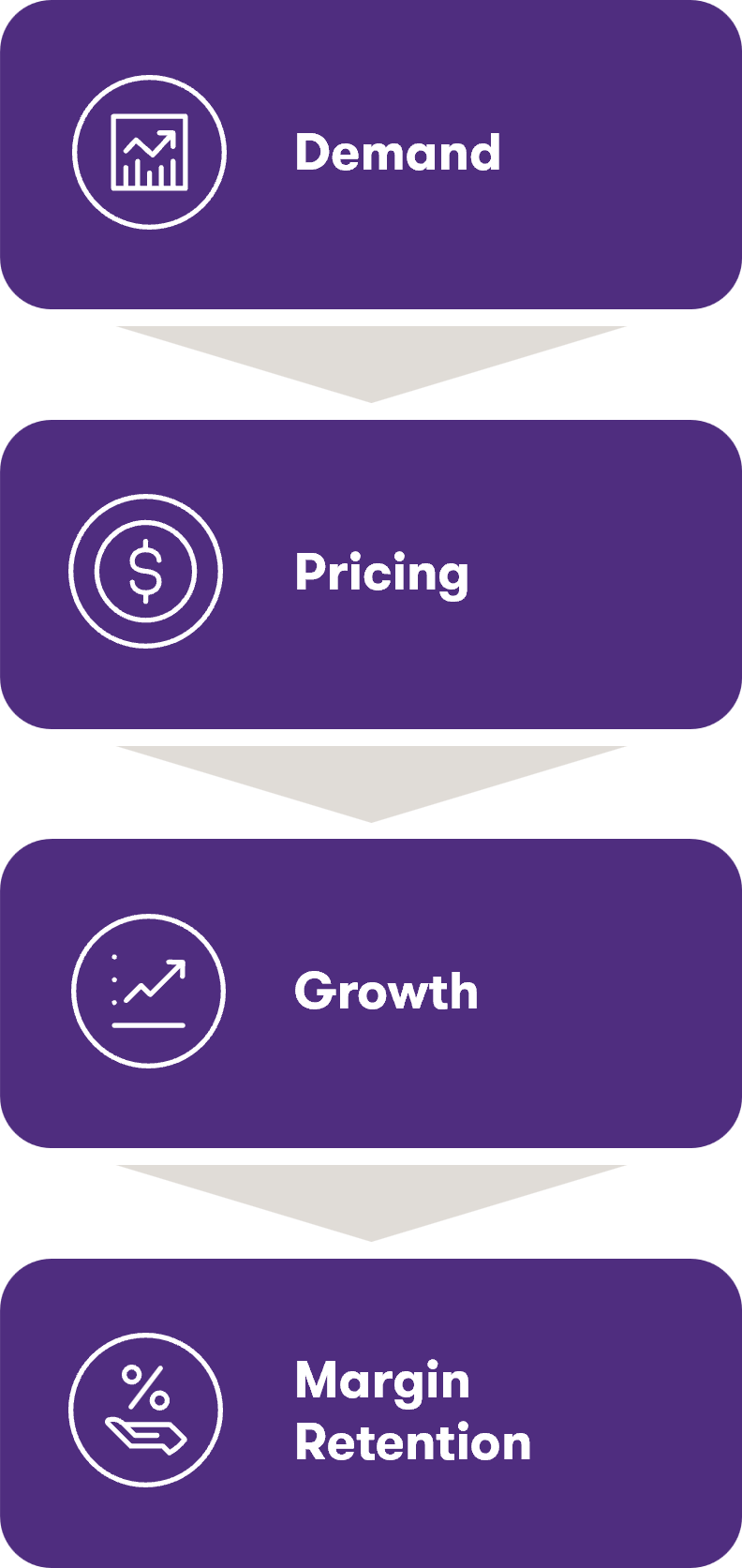

Each question evaluates sustainability through the same commercial lens already applied to pricing, growth, and operations, and embedded in the same decisions rather than running as a separate ESG workstream.
The Mid-Market Advantage
The practical implication for private equity sponsors is more straightforward than it might appear. Most privately held mid-market companies in the US face fewer mandatory disclosure obligations than large public companies and many will remain private until the next exit. That regulatory distance is a genuine competitive advantage.
Without a compliance and reporting agenda consuming disproportionate management time, sponsors and management teams can stay focused on those five questions. In diligence, sustainability should be evaluated by the same teams and through the same commercial lens used to underwrite growth, pricing, procurement, and operations. During the hold, sustainability initiatives that pass the commercial tests belong in the value creation plan alongside any other margin or revenue lever. At exit, a company that can demonstrate commercial answers to those questions has a sharper story for buyers that are increasingly asking them.
ESG data still matters but it should serve commercial decisions, not just reporting obligations.
Test the Premium Before You Launch
One example from the conference illustrated the cost of skipping this discipline. A CSO described a more sustainable product their company launched that ultimately failed in the market. The failure is instructive: the product likely reflected genuine sustainability progress—better materials, lower emissions, a real environmental benefit. What it apparently lacked was a validated commercial case. Someone assumed the green attribute would translate to demand or pricing power without first confirming who valued it, why, and what they were actually willing to pay or do differently because of it.
A green premium cannot be assumed but it should not be dismissed either. It needs to be tested before capital is committed: who values the attribute, why does it matter to them, and what are they willing to pay or do differently because of it? A product that fails because those questions were never answered is a strategy failure and an avoidable one.
Structure Reveals What You’re Optimizing For
Where sustainability sits in an organization is itself a symptom of the value capture gap. Across the conference, sustainability reported into legal, compliance, operations, product, communications, and—in one case—revenue leadership. That last example is worth noting: when a sustainability leader reports to a CRO, the primary question becomes who owns the commercial outcome. The organizational home doesn't need to be revenue in every case, but if sustainability is structured primarily as a reporting or compliance function, that is where the work will stay. Connected to product, operations, sales, and procurement, it has a meaningful chance of becoming a value creation lever.
Closing the Gap
Closing the Sustainability Value Capture Gap does not require a new framework, a larger team, or a better ESG narrative. It requires a simpler and more commercially disciplined approach: identify which sustainability attributes can translate into customer value, commercial outcomes, or cost advantage and apply the same rigor used to evaluate any other growth or margin lever.
For investors, that is the real opportunity. Not sustainability as a reporting obligation, not sustainability as brand positioning, but sustainability as a tested and commercially grounded input to enterprise value. The companies that close this gap will have a cleaner exit story, stickier revenue, and demonstrably lower risk, which is ultimately what enterprise value reflects.
To learn more about
Grant Thornton Stax and our expertise, visit our
Insights page or
contact us directly.
Read More