Share
From smart cars that are able to drive and park themselves, intelligent thermostats that detect your arrival and turn up the heat, to smart clothing that can track the amount of calories burnt — these are all part of the latest gadgets-gone-gaga trend: the Internet of Things (IoT).
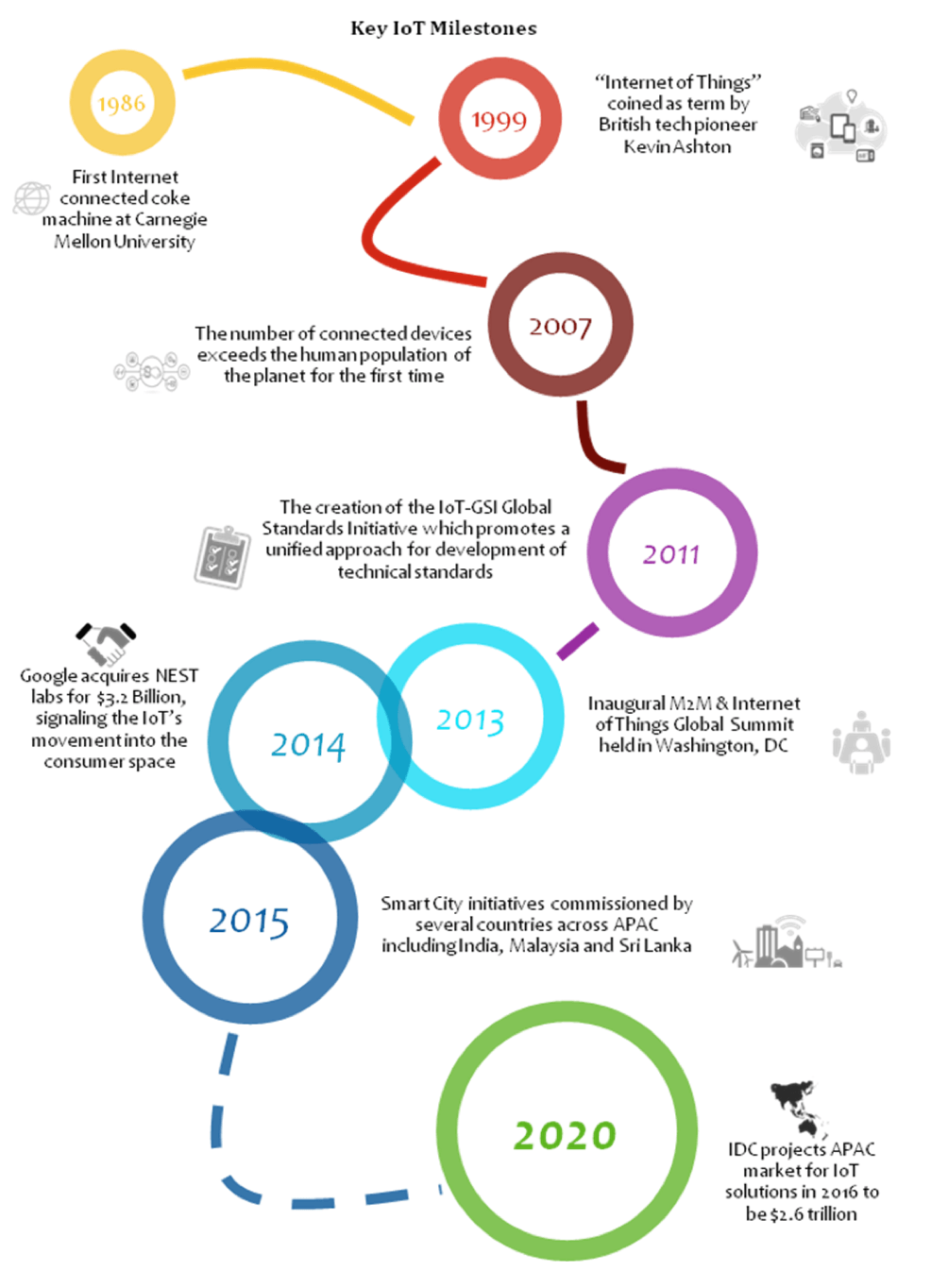
Simply put, a “thing”, in the “Internet of Things” can be any natural or man-made object with an IP address and has the ability to collect, analyze and transfer data over a network without human intervention. The concept of IoT dates all the way back to the early 1980s when a Coca-Cola machine at Carnegie Mellon University in the U.S. was modified to become an internet-connected appliance that could measure and report — without human intervention — whether or not the drinks were cold. However, it is only now that IoT is gaining significant relevance and traction driven by the declining cost of sensors, increased connectivity and enhanced data processing power.
Is it catching on in the Asian region? While estimates projected by multiple industry experts vary drastically, forecasters agree on one thing — IoT will see remarkable growth in the next few years. Experts estimate global growth to jump from 6–14 billion autonomous things in 2014 to 18–50 billion things by 2020, while the revenue opportunity of IoT is forecasted to be between $1 trillion to $7 trillion by 2020. These estimates reflect IoT’s capacity to transform both consumer and business applications in the near future.
According to the International Data Corporation (IDC), the Asia-Pacific (APAC) region is set to become the frontline for IoT with an estimated 10 billion things connected, creating a market opportunity of over $2.6 trillion by 2020. “Smart Cities” government initiatives implemented by countries like India, Singapore, Malaysia, China and Indonesia, are driving the demand for IoT solutions that can reduce costs and enhance citizen services. While government initiatives are expected to lead the IoT sector, private investments in IoT within utilities, healthcare, retail and discrete manufacturing are also likely to see high growth. For instance, healthcare smart applications like wearable devices, remote patient monitoring and clinical trial applications are revolutionizing and improving the healthcare space in India, where the doctor to patient ratio is lower than the limits set by the World Health Organization (WHO).
Have IoT investments really been successful?
Innovation-hungry companies across various sectors are capitalizing on IoT opportunities. In fact, industry experts believe that by 2025, organizations that extensively invest and incorporate IoT technologies in their products and operations will be at least 10% more profitable than competitors that don’t. In 2015, IBM’s announcement of a $3 billion investment in a new IoT business unit and General Electric’s announcement that the company made $6 billion through their industrial IoT products further proved IoT’s revenue potential. Companies in the APAC region have been following suit. For example, XL Axiata — an Indonesian telecom operator — launched a separate IoT division that offers innovative IoT products and solutions. Savvy, a smart home solution, was launched by this division in February 2016 and has recorded over 360,000 registered connections after the first three months.
The burgeoning IoT sector is also having a significant impact on the APAC startup ecosystem, with an increasing number of IoT startups receiving funding from both global and local investors. In October 2015, Qualcomm Ventures and Norwest Venture Partners invested $10 million in Chennai-based Attune Technologies, a cloud-based software provider that connects devices such as Intensive Care Unit (ICU) machines and lab analyzers to the health network. Moreover, some IoT-based startups are exhibiting impressive top line growth. Covacsis Technology — an Indian IoT startup focused on manufacturing plant optimization and backed by investors such as Cisco Systems — is seeing top line growth of 300–400%. Although the company was founded just seven years ago, the IoT solution is now being used by 25 of the top 100 manufacturing companies in India.
What is the future of IoT in Sri Lanka? Sri Lanka is certainly not far behind this revolutionary charge. Several government initiatives aimed at capturing the full potential of IoT, big data and cloud computing to empower key public sectors including education, healthcare, urban development and finance have already been commissioned. This is evident with conceptual projects like Megapolis Smart Cities that involve the implementation of real-time traffic information systems, smart power grids and smart street lighting.
Sri Lanka has also stepped into the utilities segment — the Ministry of Power and Energy launched a smart meter system in 2016 to the business community. These smart meter systems have the ability to track, monitor, and report granular utility usage data without any human intervention. This concept not only enables the Ceylon Electricity Board (CEB) to reduce its peak power generation charges by pushing consumers to shift electricity use to off-peak hours, but also helps replace the costly, traditional model that requires regular home visits to read meters.
Sri Lanka has long been recognized as a regional leader in terms of connectivity, innovation and incubation — as proven when Sri Lanka was the first country in South Asia to introduce commercial 4G services in 2014. Sri Lanka also boasts a mobile penetration of over 100% with the market rapidly shifting towards the Smartphone segment. Given that IoT solutions primarily rely on Smartphone use and connectivity, there is substantial runway for growth and adoption of IoT solutions in Sri Lanka.
What can this mean for your business? As IoT adoption becomes a reality, Sri Lankan businesses must explore the relevance of IoT to their products and services and how they can best capitalize on potential opportunities in the space. In order to enter the space and reap quick returns, it is critical for firms to make fact-based, informed decisions based on a clear understanding of not just market nuances and complexities, but also an honest assessment of in-house assets and capabilities.
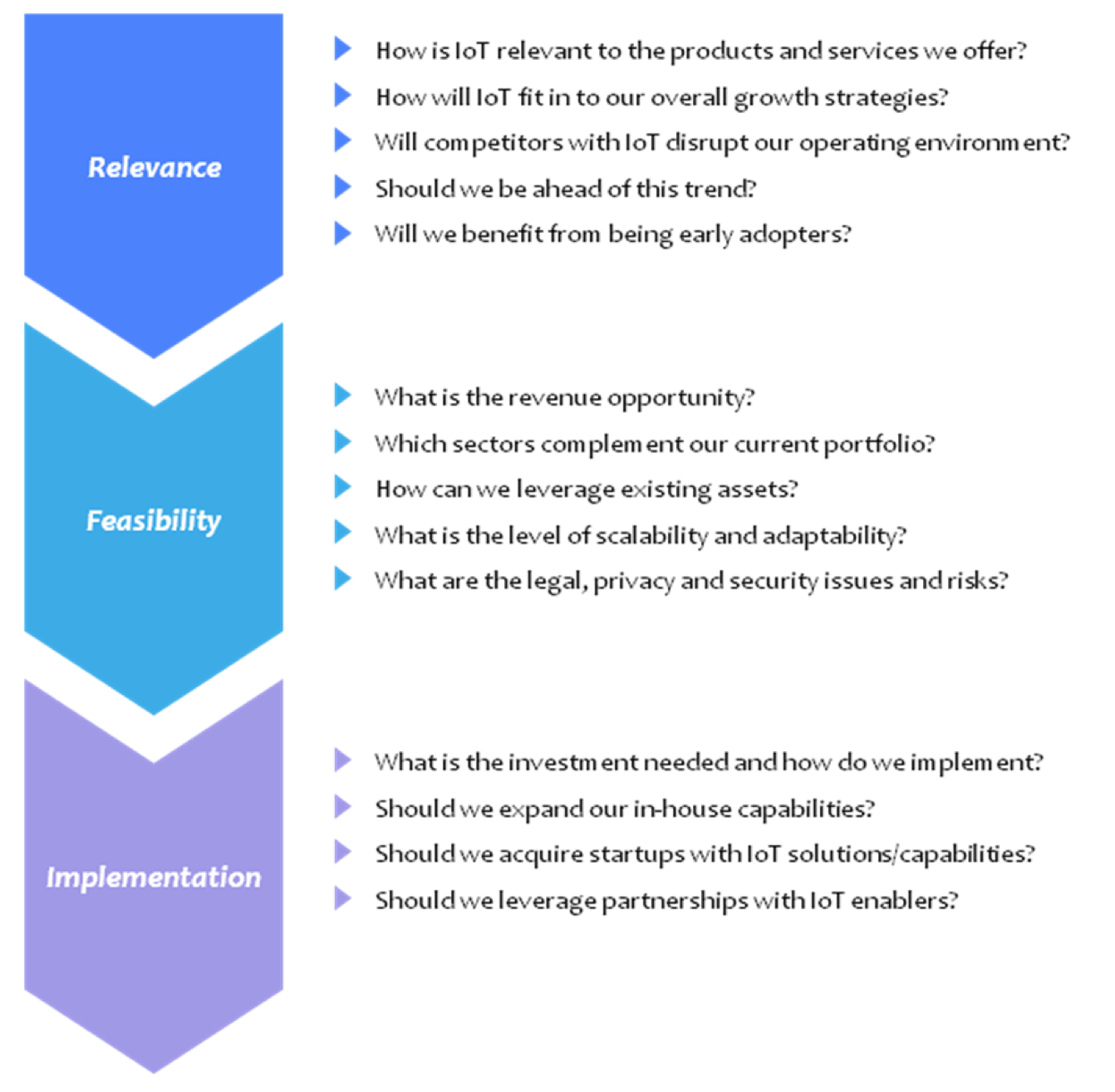
What can this mean for your business? As IoT adoption becomes a reality,
Sri Lankan businesses must explore the relevance of IoT to their products and services and how they can best capitalize on potential opportunities in the space. In order to enter the space and reap quick returns, it is critical for firms to make fact-based, informed decisions based on a clear understanding of not just market nuances and complexities, but also an honest assessment of in-house assets and capabilities.
Read More